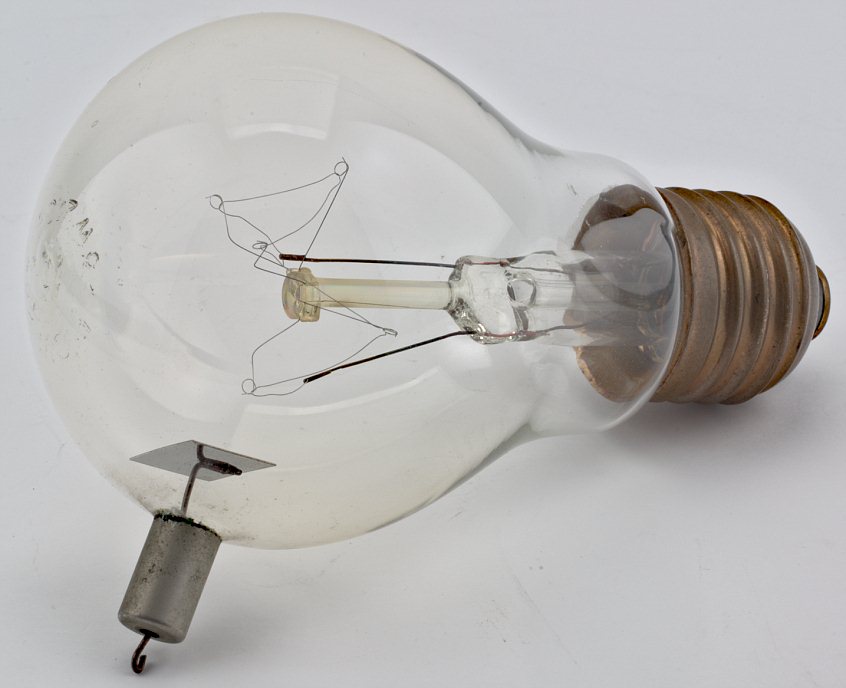
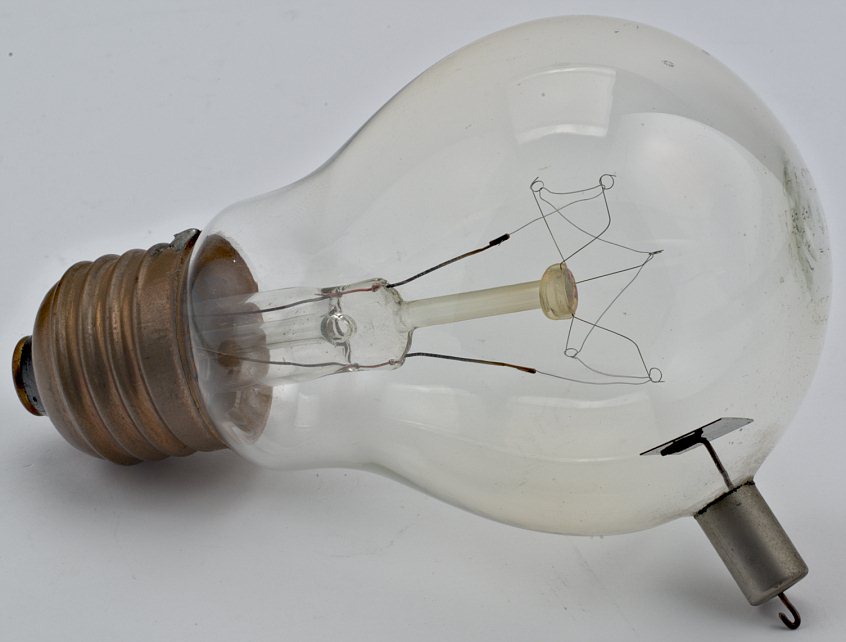
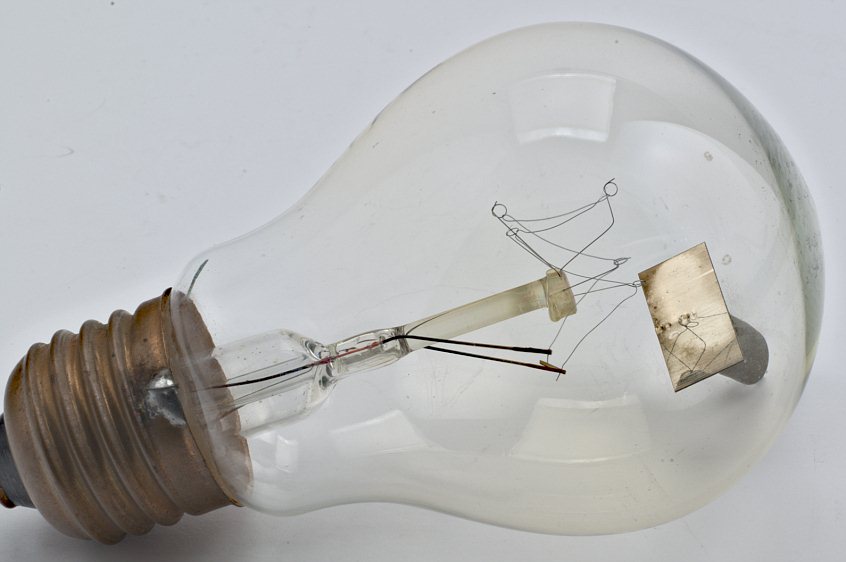
BGW Edison Effect Lamp 25W 220V
Lampe de démonstration de l'effet Edison
Edison-Effekt-Lampe
BGW = Berliner-Glühlampen-Werk (VEB Narva Kombinat).
Edison's lamps (and all incandescent lamps since) suffered from an problem known as
“lamp blackening” in which material evaporated from the filament and deposited on the inner-wall of the
glass bulb. The metal plate was intended to catch some of the carbon particles. In 1883, an assistant
experimenting with this new device electrically connected the metal plate to the positive and then the
negative side of the lamp filament. (Remember, Edison was working with direct current.) To everyone's surprise
a current was detected flowing through the vacuum inside the lamp between the filament and the plate.
In 1904, Fleming realized the Edison Effect allowed current to flow only one way (rectification) and used
it to detect weak radio signals, creating a diode that became the foundation for electronics and wireless
communication, paving the way for modern tubes
 Video on YouTube: Edison Effect
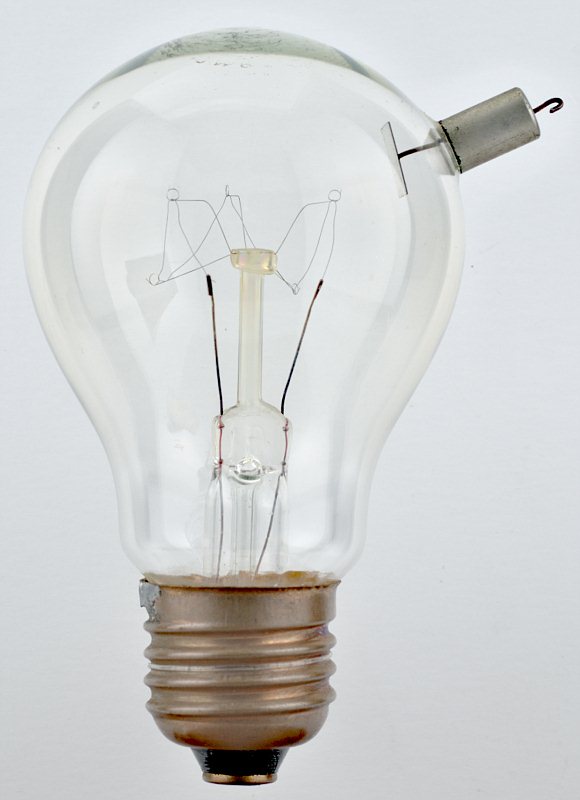
Hauteur • Height • Höhe : 10,1 cm • 4"
Diamètre • Diameter • Durchmesser : 6 cm • 2" 3/8
Le contenu de ce site est sous copyleft  The content of this site is under copyleft Der Inhalt dieser Website steht unter Copyleft



