Leybold Lenard's Tube
Tube de Lenard
Lenardröhre
Philipp Eduard Anton von Lenard (1862-1947) was a Hungarian-German experimental physicist
who received the Nobel Prize in Physics in 1905 for his work on cathode rays.
Lenard added a thin aluminum window to the basic Crookes tube. The window's foil was thick
enough to maintain the vacuum inside the tube, yet thin enough to allow the cathode rays to pass out of it.
It thus became possible to study the cathode rays, and also the fluorescence they caused, outside the discharge
tube, on pieces of paper that had been soaking in a barium platinocyanide solution to glow. Lenard concluded from
his experiments that the cathode rays were propagated through the air for distances of the order of a decimetre
and that they travel in a vacuum for several metres without being weakened. Lenard had unknowingly discovered
the first evidence for X-rays but failed to investigate the strange phenomenon further. Lenard later claimed
that he, rather than Röntgen, should be honored as the discoverer of X-rays.
• Philipp E. A. von Lenard,
On cathode rays, Nobel Lecture, May 28, 1906.
• Antje Kniest & Joachim Seibert,
Blick in die Laborbücher des Physikers Philipp Lenard, Kultur & Technik, 1/1995.
• Leybold - Gerätekarte • Directions for Use
• Mode d'Emploi.
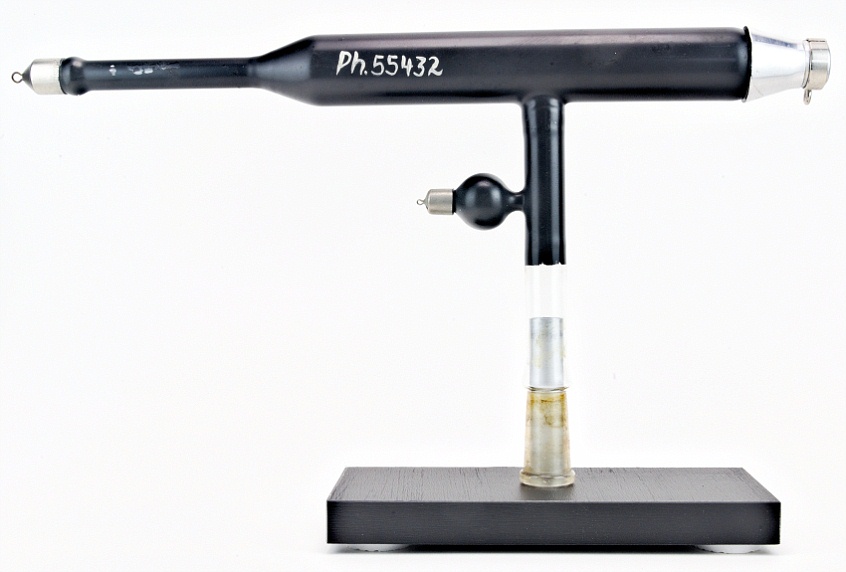
Longueur • Length • Länge : 35 cm • 13" 3/4
Hauteur • Height • Höhe : 19.5 cm • 7" 5/8
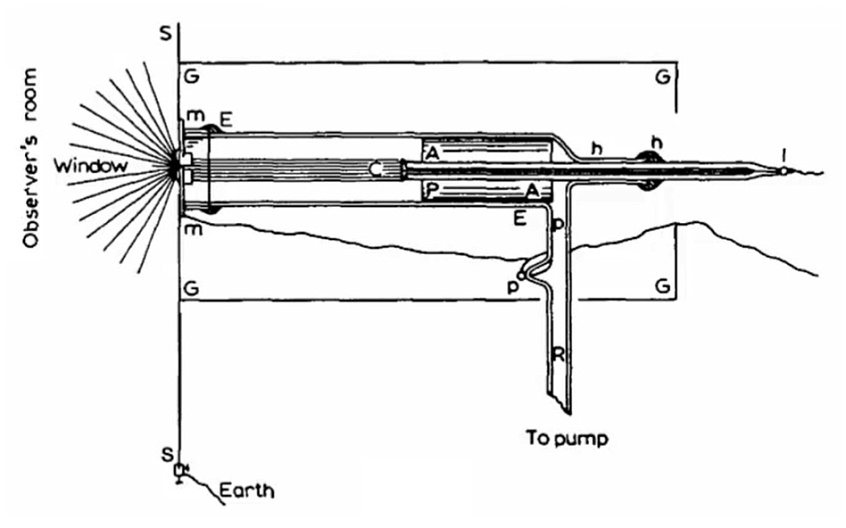
Philipp Lenard's drawing of his tube from the 1894 publication.
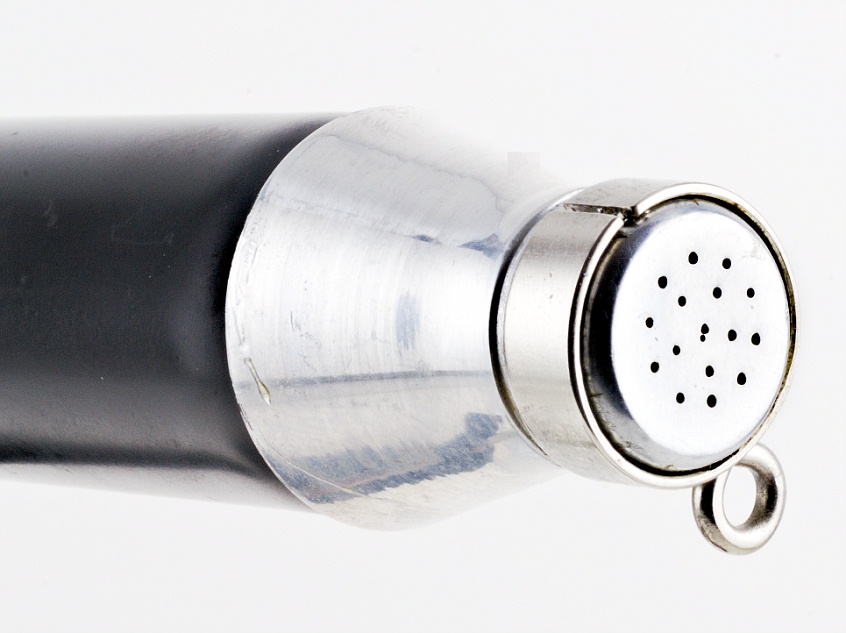
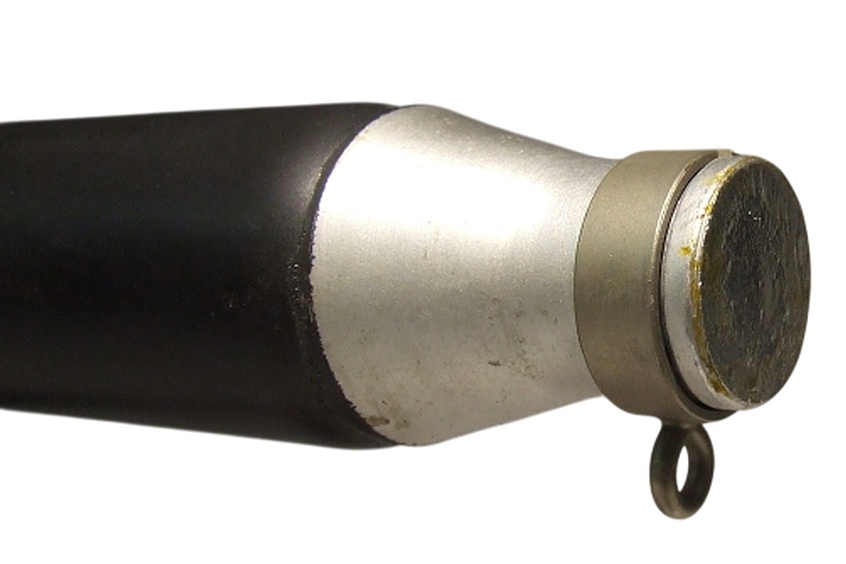
The thin aluminum foil on the front to cover the tiny holes and to let pass the cathode rays a
few centimeters into the open air.
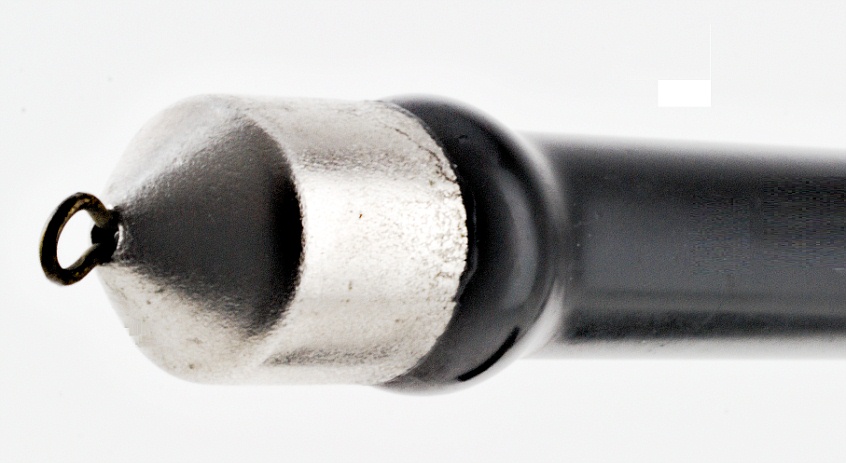
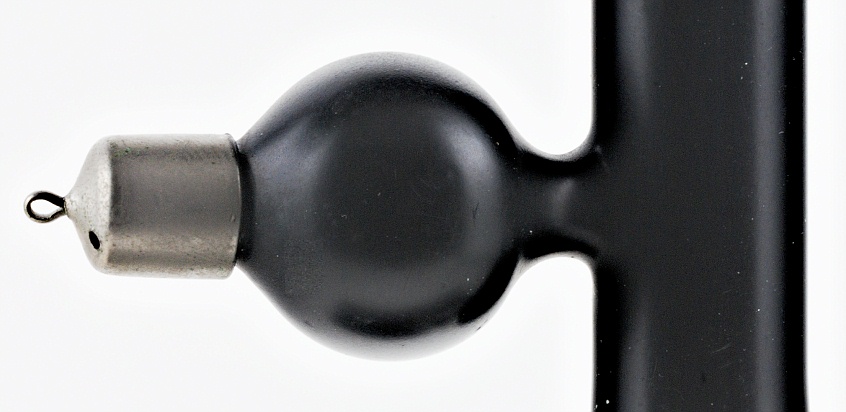
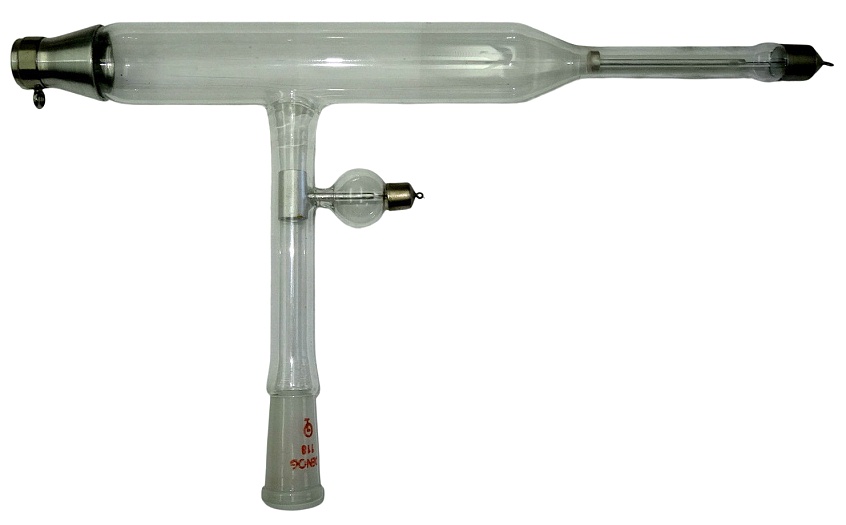
This tube from another private collection has had the lacquer removed to reveal the inner electrodes.
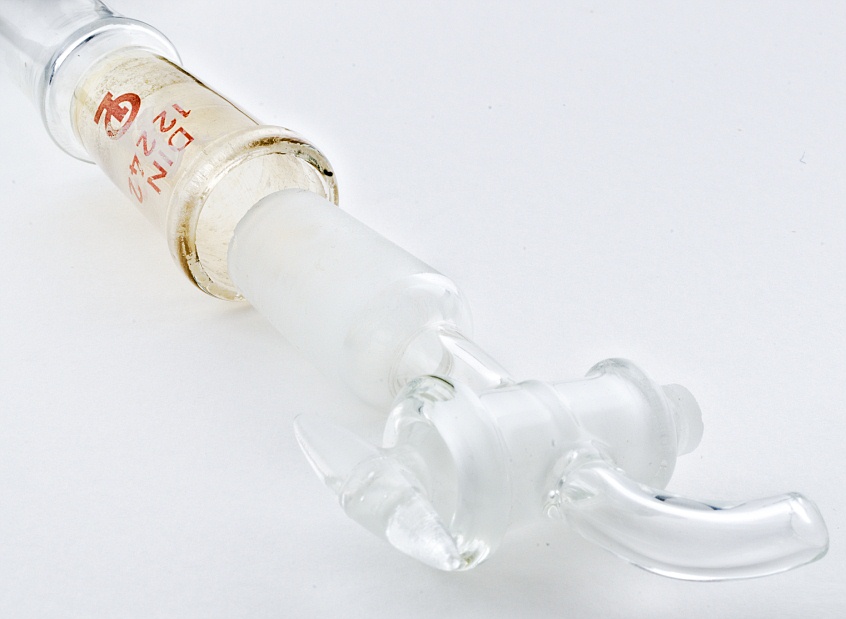
The base is open and bored for a stopper, and the tube would be run with a vacuum pump to show
the effects of lowering the vacuum right down to the degree of evacuation when the tube will produce cathode rays.
Le contenu de ce site est sous copyleft  The content of this site is under copyleft Der Inhalt dieser Website steht unter Copyleft



